Water Filter Jug Comparison
ZeroWater vs BRITA
An honest, data-driven comparison of two popular UK water filters — what they remove, what they cost to run, and which one belongs in your kitchen.
Our verdict
Key difference: ZeroWater uses 5-stage filtration certified to NSF 53 and 401 — it removes PFAS, fluoride, and arsenic that BRITA's basic carbon filter simply cannot touch. The trade-off is cost: ZeroWater filters run out faster and cost more to replace.
If you want genuine contaminant removal — particularly PFAS, heavy metals, or nitrate — ZeroWater is the clear winner. BRITA is the better choice for households who just want improved taste at the lowest possible running cost. In hard water areas, ZeroWater filters can last as little as two weeks, pushing annual costs well above £100, so factor that in.
ZeroWater is best for
Households concerned about PFAS, heavy metals, or fluoride
BRITA is best for
Everyday taste improvement at low running cost
Specs at a glance
Filter 1
ZeroWater
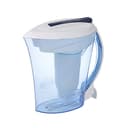
12-Cup Ready-Pour
Filter 2
BRITA
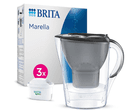
Marella XL + MAXTRA PRO
Price
£40
£25
Annual filter cost
~£120/yr
~£52/yr
Rating
4.3/5
4.5/5
Type
jug
jug
Filter life
2–4 weeks depending on TDS
4 weeks per cartridge
Certifications
NSF/ANSI 53, NSF/ANSI 401
TUV SUD
What it removes
Head-to-head breakdown
Filtration depth
ZeroWater winsZeroWater
5-stage ion exchange — removes PFAS, fluoride, arsenic, nitrate, heavy metals
BRITA
Basic activated carbon — removes chlorine, lead, copper, mercury
Running cost
BRITA winsZeroWater
~£120/year — replacement filters cost more and deplete faster
BRITA
~£52/year — MAXTRA PRO filters widely available, competitively priced
Taste improvement
ZeroWater winsZeroWater
Excellent — removes virtually all dissolved solids for flat, pure taste
BRITA
Good — effective chlorine removal improves taste noticeably
Convenience
BRITA winsZeroWater
Slower pour (5+ min to fill), 2–4 week filter life, TDS meter included
BRITA
Fast pour rate, 4-week filter life, filter-change indicator
Certifications
ZeroWater winsZeroWater
NSF/ANSI 53 and 401 certified — independently verified removal claims
BRITA
TUV SUD tested — not NSF certified
Buy either filter

Jug Filter
ZeroWater 12-Cup Ready-Pour
Households concerned about PFAS, heavy metals, or fluoride
£40
- NSF-certified to remove PFAS and heavy metals
- Includes TDS meter so you can verify performance
- 5-stage filtration in a simple jug format

Jug Filter
BRITA Marella XL + MAXTRA PRO
Everyday taste improvement at low running cost
£25
- Affordable running costs with widely available filters
- No installation — ready to use out of the box
- 3.5L capacity suits families of up to four
Common questions
Does BRITA remove PFAS?
No. BRITA MAXTRA PRO filters use activated carbon, which is not fine enough to reliably remove PFAS (forever chemicals). If your postcode has flagged PFAS contamination, you need ZeroWater or an under-sink reverse osmosis system instead.
Is ZeroWater worth the higher running cost?
It depends on what you want to remove. ZeroWater is NSF/ANSI 401 certified to remove PFAS and NSF/ANSI 53 certified for heavy metals — claims BRITA cannot make. If you are in a high-PFAS or high-lead area, the extra cost is worth it. If you just want better-tasting water, BRITA delivers that at roughly half the annual running cost.
How do I know when a ZeroWater filter needs replacing?
ZeroWater includes a TDS (total dissolved solids) meter in the box. When your filtered water reads 006 ppm on the meter — matching your unfiltered tap water — the filter is spent. In soft water areas this might last 4 weeks; in hard water areas it can be as little as 2 weeks.
Which jug is better for hard water areas?
BRITA is more practical in hard water areas. Because ZeroWater's 5-stage filter captures all dissolved minerals, it depletes very quickly in hard water — sometimes in under two weeks. BRITA's filter life is less affected by hardness, making it more economical if you live in London, the South East, or the Midlands.
See what is in your water
Enter your postcode to get a detailed water quality report for your area — so you know exactly which contaminants you need to target.