Water Quality and Pregnancy: What You Need to Know
By TapWater.uk Research··Independent research
UK tap water is among the most tightly regulated in the world, and for the vast majority of pregnant women in most postcodes, it is safe to drink without modification. But pregnancy is a period when the developing baby is more vulnerable to contaminants than a healthy adult — and a small number of specific substances can cross the placenta or affect foetal development at concentrations that cause no obvious symptoms in the mother.
This guide focuses on three contaminants with the strongest evidence base — lead, nitrate, and PFAS — and explains what the NHS recommends, what the science shows, and what practical steps you can take if you want additional reassurance.
Why water quality matters more during pregnancy
A developing baby cannot filter out contaminants the way an adult body can. The placenta is not a perfect barrier — many substances that circulate in the mother's blood can reach the foetus. This does not mean tap water is dangerous; it means that the small margins of risk that are acceptable for a healthy adult carry more weight when a foetus is involved.
The World Health Organization's guidance on drinking water safety during pregnancy identifies lead, nitrate, and certain persistent chemicals including PFAS as the primary concerns in water supplies that otherwise meet standard safety thresholds. In the UK, all three are monitored and regulated — but regulation sets a legal maximum, not a health guarantee, and some homes still have infrastructure that can introduce contaminants after the water leaves the treatment works.
Contaminants to watch
Lead
Lead is a proven neurotoxin with no safe exposure level. Unlike many contaminants, it crosses the placenta freely and accumulates in foetal tissue. Early-life lead exposure — including in the womb — is associated with reduced cognitive development, lower IQ, and impaired neurological function. These effects are permanent. There is no treatment that reverses neurological damage from prenatal lead exposure.
In UK water supplies, lead comes not from the treatment works but from the infrastructure in between: lead service pipes in older homes, lead-jointed fittings, and historically lead solder used to join copper pipes. Homes built before 1970 are at highest risk. See our lead contaminant page for postcode-level monitoring data.
Nitrate
Nitrate in drinking water is primarily an agricultural issue — it enters groundwater and surface water through fertiliser runoff. The main concern during pregnancy is not direct harm to the mother, but the risk to formula-fed infants if nitrate-containing tap water is used to make up feeds. High nitrate levels can interfere with the blood's ability to carry oxygen, causing a condition known as methaemoglobinaemia — sometimes called blue baby syndrome. The UK legal limit for nitrate in drinking water is 50 mg/L, which is considered safe for adults and most children. Bottle-fed infants are the primary at-risk group.
Nitrate levels vary significantly by area. Agricultural regions — particularly parts of East Anglia, Lincolnshire, and the East Midlands — tend to have higher nitrate readings than upland or urban areas. Check the nitrate data for your postcode to see where your area sits.
PFAS
PFAS — per- and polyfluoroalkyl substances — are a large family of industrial chemicals that do not break down in the environment or in the human body. They are found in UK drinking water supplies near industrial sites, airports, and areas where firefighting foam containing PFAS has been used. The science on PFAS in pregnancy is still developing, but multiple studies have found associations between PFAS exposure and lower birth weight, reduced foetal growth, thyroid disruption, and altered immune function in children. The UK government has introduced a regulatory limit for total PFAS in drinking water, but campaigners and some scientists argue it should be tighter.
The NHS position is clear: UK tap water is safe for pregnant women. The NHS Start4Life guidance does not advise pregnant women to avoid tap water or to use filters as a general precaution. UK water companies must comply with the Water Supply (Water Quality) Regulations 2016, which set legally enforceable limits for hundreds of substances. The Drinking Water Inspectorate publishes annual compliance reports and water companies face enforcement action if they fall short.
However, the NHS also acknowledges the lead pipe problem specifically. NHS advice notes that homes with lead pipes carry a higher risk of lead in tap water, and recommends running the cold tap for 30 seconds before drinking — particularly first thing in the morning when water has been sitting in contact with lead pipes overnight. This is especially relevant during pregnancy.
NHS guidance summary
UK tap water is safe to drink during pregnancy in the vast majority of cases
In homes with lead pipes, run the cold tap for 30 seconds before drinking
Do not use hot tap water for drinking, cooking, or making up formula — it dissolves lead more readily
Bottled water is not automatically safer — some mineral waters have high sodium or sulphate levels unsuitable for formula
How to check your water quality
Enter your postcode below to see what monitoring data shows for your area. TapWater.uk tracks lead, nitrate, PFAS, and 50+ other contaminants across UK postcodes, drawing on Drinking Water Inspectorate compliance data and Environment Agency monitoring returns.
The safety score on your postcode report summarises how your area performs across all monitored contaminants — 100 is a clean bill of health, lower scores indicate one or more contaminants detected at levels worth paying attention to. You can click through to any contaminant to see the specific monitoring data.
Check your postcode
Covers lead, nitrate, PFAS, and 50+ other contaminants across UK postcodes.
Best filters for pregnant women
If you live in an older property, your postcode report shows elevated lead, or you want additional peace of mind during pregnancy, filtration is a reasonable step. Different filter types offer different levels of protection.
Reverse osmosis — the most thorough option
Reverse osmosis systems push water through a semi-permeable membrane that removes 95–99% of lead, PFAS, nitrate, fluoride, and most other dissolved contaminants. They are the most comprehensive under-sink option for households with specific concerns — particularly lead pipe risk or confirmed PFAS detection. They require installation under the kitchen sink and connect to a separate filtered-water tap. See our reverse osmosis guide for a full comparison.
Recommended for lead and PFAS removal during pregnancy
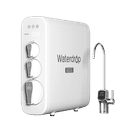
Waterdrop G3P600 Reverse Osmosis
Reverse Osmosis · NSF/ANSI 58, NSF/ANSI 372
Why it fits
Removes 12+ contaminants including PFAS and fluoride
Tankless design saves under-sink space
Smart TDS monitoring panel shows real-time water quality
Trade-offs
Professional installation recommended — plumbing required
Affiliate link: we may earn a commission at no extra cost to you.
Carbon block filters — certified lead reduction
Pitcher-style and under-sink carbon block filters certified to NSF/ANSI Standard 53 can reduce lead by 90% or more at the tap. Look specifically for NSF 53 certification — not all carbon filters reduce lead, and many standard pitcher filters (including some BRITA models) are not certified for lead removal. This is a lower-cost option than reverse osmosis and sufficient if your concern is lead alone rather than PFAS or nitrate.
Note that no filter eliminates the need to run the tap for 30 seconds first if you have lead pipes — the filter needs fresh water flowing through it to work effectively.
Frequently asked questions
Is UK tap water safe during pregnancy?
The NHS says yes — UK tap water is safe to drink during pregnancy in most areas. Water companies must meet strict legal standards. The main exception is homes with lead pipes, where the NHS advises running the cold tap before drinking. If you are in a pre-1970 home, check your postcode above.
Should I use a water filter when pregnant?
It depends on your specific situation. If you are in a home with lead pipes, an NSF 53-certified filter or reverse osmosis system is a sensible precaution. If your postcode report shows PFAS detection, reverse osmosis provides the most effective removal. For households in newer properties with no flagged contaminants, a filter is optional rather than necessary.
Does boiling water remove lead?
No. Boiling does not remove lead and can actually slightly concentrate it by reducing the water volume. The only way to reduce lead at the tap is to run the tap first to flush standing water, and to use a certified lead-reducing filter for drinking and cooking water.
What about bottled water during pregnancy?
Bottled water is not automatically safer than tap water during pregnancy. Some mineral waters contain high levels of sodium or sulphate, which are not recommended for formula. UK tap water — which is heavily regulated — is generally a more consistent choice. If you want to avoid specific contaminants, a good filter is more reliable and far cheaper than bottled water.