PFAS — per- and polyfluoroalkyl substances, also called “forever chemicals” — have been found in water supplies across the UK. We analysed water quality data from 2,800 UK postcodes and found PFAS detections in multiple water supply zones, particularly near industrial sites and former military bases.
Here is the uncomfortable truth: most water filters do not remove PFAS. Standard BRITA jugs, basic carbon filters, and boiling your water all fail. Only specific filtration technologies — reverse osmosis (NSF 58) and select advanced carbon filters — are proven to reduce PFAS to safe levels. This guide covers the filters that actually work.
This guide contains affiliate links. If you buy through these links, we earn a small commission at no extra cost to you. This funds our independent water quality research. Our recommendations are based on NSF certifications and real contaminant data, not sponsorship. Full disclosure
Quick picks for PFAS removal
Most reliable
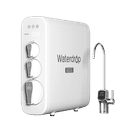
Waterdrop G3P600 Reverse Osmosis
NSF 58 certified RO, removes 90–99% of PFAS compounds
£550
Value RO pick
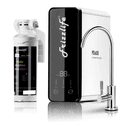
Frizzlife PD600 Under Sink RO
NSF 58 certified, same PFAS removal for £100 less
£450
Budget pick
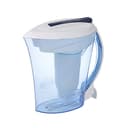
ZeroWater 12-Cup Ready-Pour
NSF 53/401 certified jug — the cheapest PFAS removal option
£40
No-install option
TAPP Water EcoPro
Clips onto your tap, removes PFAS and microplastics
£60
What are PFAS and why should you care?
PFAS are a family of over 12,000 man-made chemicals that have been used since the 1950s. You will find them in non-stick pans, food packaging, waterproof jackets, and firefighting foam. They are called “forever chemicals” because they do not break down — not in the environment, and not in your body.
The health concerns are serious. Peer-reviewed research has linked PFAS exposure to:
Increased cancer risk — particularly kidney and testicular cancer
Thyroid disease — PFAS interfere with thyroid hormone production
Immune system suppression — reduced vaccine effectiveness has been observed in children with higher PFAS levels
Reproductive problems — linked to reduced fertility and increased risk of pre-eclampsia
Is PFAS detected in your area?
Enter your postcode to check. If PFAS is flagged, a certified filter is the only way to reduce your exposure today.
Which filter types actually remove PFAS?
Reverse osmosis (NSF 58) — the gold standard
RO membranes filter at 0.0001 microns — small enough to physically block PFAS molecules. NSF/ANSI 58 certified systems have been independently tested and verified to remove 90–99% of PFAS compounds. This is the most reliable option if PFAS are your primary concern. The trade-off: the certified RO systems below cost £450–£550, require under-sink installation, and waste some water during filtration.
Specialised carbon filtration (NSF 53/401) — the budget option
Not all carbon filters remove PFAS. Standard activated carbon (like in a BRITA) does not. But specialised 5-stage carbon filtration (like ZeroWater) certified to NSF/ANSI 53 and 401 has been independently verified for PFAS reduction. The ZeroWater jug is the cheapest option at £40, but filters deplete quickly in hard water areas — expect £120/year in replacements.
What does NOT remove PFAS
Standard BRITA filters, basic carbon jug filters, boiling water, UV treatment, and water softeners do NOT remove PFAS. Boiling actually concentrates PFAS by evaporating the water while leaving the chemicals behind. If a filter does not carry NSF 53, NSF 401, or NSF 58 certification specifically for PFAS, do not trust marketing claims.
The best filters for PFAS removal in the UK
Most reliable — NSF 58 certified RO
Waterdrop G3P600 Reverse Osmosis
Reverse Osmosis · NSF/ANSI 58, NSF/ANSI 372
Why it fits
Removes 12+ contaminants including PFAS and fluoride
Tankless design saves under-sink space
Smart TDS monitoring panel shows real-time water quality
Trade-offs
Professional installation recommended — plumbing required
Affiliate link: we may earn a commission at no extra cost to you.
Waterdrop G3P600 — Most reliable PFAS removal
Waterdrop G3P600 Reverse Osmosis
£550
NSF 58 certified. The most dependable way to remove PFAS from your drinking water.
If PFAS are your primary concern, this is the filter to buy. The Waterdrop G3P600 is a tankless reverse osmosis system certified to NSF/ANSI 58 — the international standard that verifies 90–99% PFAS removal. It also removes fluoride, arsenic, nitrate, lead, and 8 other contaminant categories. The smart TDS monitoring panel shows you real-time filtration performance so you can see it working. At £550 plus £144/year in running costs, it is a significant investment. But it is the only technology that reliably removes PFAS regardless of which specific PFAS compounds are present in your water.
Same NSF 58 PFAS removal standard for £100 less than the Waterdrop.
The Frizzlife PD600 carries the same NSF/ANSI 58 certification as the Waterdrop, which means identical PFAS removal verification. It removes 10 contaminant categories including PFAS, fluoride, arsenic, and nitrate. Like the Waterdrop, it has a screen showing how clean the filtered water is and when a filter is due, so you can see it working. It also puts some minerals back after filtering, so the water tastes less flat. What you give up for £100 less: slightly noisier operation and fewer certifications overall. The core PFAS removal is equivalent, and the filters cost about £107 a year against the Waterdrop's £144. If you want RO-level PFAS protection and price matters, the Frizzlife is the smarter buy.
The cheapest way to remove PFAS. NSF 53 and 401 certified in a simple jug.
If you cannot install an under-sink system — or you want PFAS removal for £40 instead of £450 — the ZeroWater is the answer. It is the only jug filter certified to NSF/ANSI 53 and 401 for PFAS removal. The 5-stage filtration also removes lead, chromium, mercury, fluoride, arsenic, and nitrate. The included TDS meter lets you check when the filter is spent. The catch: ZeroWater filters deplete fast, especially in hard water areas (2–3 weeks per filter). At £120/year in replacement filters, it costs more to run than the Frizzlife RO system. But as a starting point for PFAS removal, nothing else comes close at this price.
Clips onto your tap. Removes PFAS and microplastics without plumbing.
The TAPP Water EcoPro is a tap-mounted filter that clips onto most standard UK kitchen taps. It removes PFAS, microplastics, chlorine, and lead — rare for a filter at this price point and form factor. The biodegradable filter cartridges are an eco-friendly touch. The caveat: it is SGS tested rather than NSF certified, which means the testing was done by a reputable lab but did not go through the full NSF certification process. For renters or anyone who cannot modify their plumbing, it is the most practical PFAS-reducing option available. At £60 upfront and £80/year, the total cost of ownership is moderate.
Removes
ChlorineLeadMicroplasticsPFAS (total)
SGS tested
Pros
Clips onto most standard UK kitchen taps — no plumbing needed
Eco-conscious households wanting PFAS removal at the tap
£60
4.4
£80/yr
Our verdict
For the most reliable PFAS removal, a reverse osmosis system is the answer. The Waterdrop G3P600 (£550) is our top pick with NSF 58 certification and real-time TDS monitoring. The Frizzlife PD600 (£450) offers the same PFAS removal at a lower price.
If you cannot install an under-sink system, the ZeroWater 12-Cup jug at £40 is the only jug with certified PFAS removal. Higher running costs, but the lowest possible entry point.
One thing is certain: standard BRITA filters do NOT remove PFAS. If forever chemicals are a concern in your area, you need one of the filters above.
PFAS stands for per- and polyfluoroalkyl substances — a family of over 12,000 synthetic chemicals used since the 1950s in non-stick coatings, food packaging, waterproof clothing, and firefighting foam. They are called 'forever chemicals' because they do not break down in the environment or in your body. PFAS have been linked to increased cancer risk, thyroid disease, immune system suppression, and reproductive problems. They enter the water supply through industrial discharge, landfill leachate, and agricultural runoff.
Does boiling water remove PFAS?
No. Boiling water does not remove PFAS — it actually concentrates them. As water evaporates, the PFAS remain behind in a smaller volume of water, making the concentration higher. The same applies to distillation unless you capture and condense the steam while leaving the residue behind. The only proven methods for removing PFAS from drinking water are reverse osmosis (NSF 58), activated carbon filtration (to a lesser extent), and ion exchange resins.
Does a BRITA filter remove PFAS?
No. Standard BRITA MAXTRA PRO filters are not certified to remove PFAS. BRITA's activated carbon reduces chlorine, lead, and some metals, but PFAS molecules require either a much finer filtration medium (like an RO membrane) or a specialised carbon block certified to NSF/ANSI 53 for PFAS. If PFAS are a concern in your area, the ZeroWater jug (NSF 53 and 401 certified) is the only jug that removes them. For the most reliable PFAS removal, a reverse osmosis system certified to NSF 58 is the gold standard.
Is UK tap water safe from PFAS?
UK tap water meets current DWI standards, but PFAS regulation is evolving. The UK does not yet have legally binding limits for PFAS in drinking water — the DWI uses a guideline value of 100 ng/L for total PFAS. Our analysis of 2,800 UK postcodes found that PFAS have been detected in multiple water supply zones, particularly near industrial sites and former military bases. Whether current levels are 'safe' depends on which scientific body you ask. The EU has proposed stricter limits of 4 ng/L for individual PFAS compounds. If you want to minimise your exposure, filtration is the only option available to you today.