According to TapWater.uk's analysis of Environment Agency monitoring data, PFAS compounds have been detected at 530 sampling points across 43 UK cities. England and Wales have no statutory limit for PFAS in drinking water as of 2026, only a 0.1 µg/L regulator's guideline.
Total detections
12,297
Cities affected
43/50
Highest level
0.960 µg/L
Liverpool
Latest detection
11 August 2026
<0.01 µg/L
0.01–0.075 µg/L
>0.075 µg/L
· Based on Environment Agency monitoring data
PFAS levels by city
43 cities with PFAS detections, ranked by highest recorded level. Click any city for a full breakdown.
Data from the Environment Agency Water Quality Archive. "Highest" shows the single highest PFAS reading recorded at any monitoring point near the city.
Cities with no PFAS detections on record
Tested, nothing found. Each page shows what was sampled.
PFAS (per- and polyfluoroalkyl substances) are a group of over 10,000 synthetic chemicals used since the 1950s in products ranging from non-stick pans and waterproof clothing to food packaging and firefighting foam. They are known as "forever chemicals" because their carbon-fluorine bonds are among the strongest in chemistry, meaning they do not break down naturally in the environment or the human body.
PFAS contamination of water sources is a growing concern worldwide. These chemicals enter waterways through industrial discharge, landfill leachate, and the use of PFAS-containing firefighting foam at military bases and airports. Health studies have linked long-term PFAS exposure to increased risks of certain cancers, thyroid disease, liver damage, immune system suppression, and developmental effects in children.
UK vs EU regulation
England and Wales have no statutory standard for PFAS in drinking water. What exists is a regulator's guideline: the Drinking Water Inspectorate sets 0.1 µg/L for the sum of 48 named PFAS, and since March 2025 requires water companies to monitor a wider range of PFAS and update their risk assessments. So testing is required; a legally enforceable limit on the result is not.
By contrast, the EU introduced a binding limit of 0.1 µg/L for total PFAS in drinking water from January 2026 under the revised Drinking Water Directive. The World Health Organization (WHO) also recommends a guideline value of 0.1 µg/L. Post-Brexit, the UK is not obliged to follow EU standards, and as of 2026 has not announced plans to adopt an equivalent limit.
How to remove PFAS from your water
Reverse osmosis (RO) filtration is the most effective home method for removing PFAS, eliminating over 95% of PFAS compounds from drinking water. Activated carbon filters can reduce some PFAS but are inconsistent. Standard jug filters such as BRITA do not remove PFAS. If you are concerned about PFAS exposure, an under-sink reverse osmosis system offers the best protection.
Removes >95% of PFAS compounds
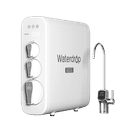
Waterdrop G3P600 Reverse Osmosis
Reverse Osmosis · NSF/ANSI 58, NSF/ANSI 372
Why it fits
Removes 12+ contaminants including PFAS and fluoride
Tankless design saves under-sink space
Smart TDS monitoring panel shows real-time water quality
Trade-offs
Professional installation recommended — plumbing required
Affiliate link: we may earn a commission at no extra cost to you.
Check your postcode
Get a detailed water quality report including PFAS data for your exact area.
Frequently asked questions
What is PFAS?
PFAS (per- and polyfluoroalkyl substances) are a group of over 10,000 synthetic chemicals known as 'forever chemicals' because they do not break down in the environment. They are used in non-stick coatings, waterproof clothing, food packaging, and firefighting foam. PFAS have been linked to health risks including cancer, thyroid disease, and immune system suppression.
Is UK tap water safe from PFAS?
There are no statutory standards for PFAS in drinking water in England and Wales. There is a regulator's guideline: the Drinking Water Inspectorate sets a value of 0.1 µg/L that applies to individual PFAS compounds and to the combined sum-of figure, and since March 2025 water companies must monitor a wider range of PFAS and update their risk assessments. Those results are not published per location, so no public dataset shows what was found in a given postcode.
Which UK cities have PFAS in their water?
Environment Agency monitoring has detected PFAS compounds in water sources near 43 UK cities. The cities with the highest recorded levels include Liverpool, Sheffield, Derby, Blackburn, Warrington. Detection does not necessarily mean PFAS is present in treated tap water.
What is the UK legal limit for PFAS in water?
As of 2026, the UK has no legal limit for PFAS in drinking water. The Drinking Water Inspectorate (DWI) has issued guidance values but these are not legally binding. By contrast, the EU set a binding limit of 0.1 µg/L for total PFAS in January 2026, and the WHO recommends the same threshold.
How do I remove PFAS from my water?
Reverse osmosis (RO) filtration is the most effective method for removing PFAS from drinking water, removing over 95% of PFAS compounds. Activated carbon filters can reduce some PFAS but are less effective. Standard jug filters like BRITA do not remove PFAS. For home use, an under-sink RO system is the most reliable option.
Should I be worried about PFAS in UK water?
PFAS in a water source does not mean your tap water contains PFAS at harmful levels, and treatment can reduce concentrations. Water companies in England and Wales are required to monitor PFAS and act on the Drinking Water Inspectorate's 0.1 µg/L guideline, so this is being tested for. What is missing is publication: the results are not released per location, so you cannot check your own area. If you would rather not wait for that, reverse osmosis is the most effective home filtration for PFAS.