Based on Environment Agency monitoring data. Last updated 23 February 2026.
According to TapWater.uk's analysis, 15 PFAS compounds have been detected across 4 sampling points in Portsmouth. The highest recorded level is 0.040 µg/L (PFHxA).
Compounds detected
15
Sampling points
4
Highest level
0.040 µg/L
Latest date
23 February 2026
<0.01 µg/L
0.01–0.075 µg/L
>0.075 µg/L
PFAS levels over time
Monthly aggregate PFAS levels. Dashed line shows WHO guideline (0.1 µg/L).
Compounds detected
PFHxA
0.0400 µg/L
PFBA
0.0110 µg/L
6:2 FTSA
0.0110 µg/L
PFPeA
0.0096 µg/L
PFHpA
0.0086 µg/L
PFOS
0.0040 µg/L
PFOS (linear)
0.0037 µg/L
PFBS
0.0034 µg/L
PFOS (total)
0.0029 µg/L
PFOA
0.0028 µg/L
PFOS (branched)
0.0026 µg/L
PFHxS (linear)
0.0022 µg/L
PFecHS
0.0014 µg/L
PFHxS (branched)
0.0005 µg/L
PFPeS
0.0005 µg/L
Dashed line = WHO guideline (0.1 µg/L). Bar shows maximum detected level.
Sampling points
Environment Agency monitoring locations near Portsmouth.
LocationMax levelCompoundCoordinates
PRIORS HOLD FARM, WALLINGTON
0.004 µg/LPFOS50.8797, -1.1460
HERMITAGE STREAM AT B2150 HAVANT - NEW ROAD
0.040 µg/LPFHxA50.8561, -0.9916
RIVER WALLINGTON AT RIVERSDALE
0.002 µg/LPFBA50.8590, -1.1711
R EASTERN YAR AT WEED GRID ST HELENS
0.011 µg/L6:2 FTSA50.6932, -1.1092
What this means for your tap water
Important context: the Environment Agency data shown here is from environmental monitoring of rivers and groundwater — not treated tap water. PFAS detected in source water does not necessarily mean the same levels are present in the water that comes out of your tap.
Water treatment processes can reduce PFAS concentrations, though the effectiveness varies by treatment method and PFAS compound. UK water companies are not required to publish PFAS removal rates. If you are concerned, a reverse osmosis filter offers the most reliable protection at home.
How to reduce PFAS exposure
A reverse osmosis system is the most effective way to remove PFAS from your drinking water at home, eliminating over 95% of forever chemicals.
Removes >95% of PFAS compounds
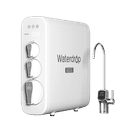
Waterdrop G3P600 Reverse Osmosis
Reverse Osmosis · NSF/ANSI 58, NSF/ANSI 372
Why it fits
Removes 12+ contaminants including PFAS and fluoride
Tankless design saves under-sink space
Smart TDS monitoring panel shows real-time water quality
Trade-offs
Professional installation recommended — plumbing required
Get a detailed water quality report for your exact area in Portsmouth.
Frequently asked questions
Has PFAS been found in Portsmouth water?
Yes. Environment Agency monitoring has detected 15 PFAS compounds across 4 sampling points in water sources near Portsmouth. The highest recorded level is 0.040 µg/L (PFHxA). Note that this is environmental monitoring of rivers and groundwater, not treated tap water.
What PFAS compounds were found in Portsmouth?
The following PFAS compounds have been detected near Portsmouth: PFOS, PFOA, PFecHS, PFOS (branched), PFHxS (branched), PFPeA, PFHxA, PFHxS (linear), PFBA, PFPeS, PFHpA, PFOS (linear), PFBS, 6:2 FTSA, PFOS (total). PFHxA was recorded at the highest level of 0.040 µg/L.
Is Portsmouth tap water safe to drink despite PFAS?
Portsmouth tap water meets all current UK legal standards. However, the UK has no legal limit for PFAS in drinking water. The Environment Agency data shows PFAS in source water (rivers and groundwater), not in treated tap water. Water treatment may reduce PFAS levels, but the extent of removal is not publicly reported.
How can I remove PFAS from my water in Portsmouth?
The most effective method is a reverse osmosis (RO) filtration system, which removes over 95% of PFAS compounds. Standard carbon filters and jug filters like BRITA do not effectively remove PFAS. An under-sink RO system is recommended for Portsmouth households concerned about PFAS exposure.