Based on Environment Agency monitoring data. Last updated 3 July 2026.
According to TapWater.uk's analysis, 18 PFAS compounds have been detected across 15 sampling points in Liverpool. The highest recorded level is 0.960 µg/L (PFBA).
Compounds detected
18
Sampling points
15
Highest level
0.960 µg/L
Latest date
3 July 2026
<0.01 µg/L
0.01–0.075 µg/L
>0.075 µg/L
PFAS levels over time
Monthly aggregate PFAS levels. Dashed line shows WHO guideline (0.1 µg/L).
Compounds detected
PFBA
0.9600 µg/L
6:2 FTSA
0.1200 µg/L
PFOA
0.0098 µg/L
FBSA
0.0067 µg/L
PFPeA
0.0052 µg/L
PFOS
0.0051 µg/L
PFBS
0.0043 µg/L
PFHxA
0.0040 µg/L
PFHxS (linear)
0.0031 µg/L
PFOS (linear)
0.0028 µg/L
PFHpA
0.0023 µg/L
PFOS (total)
0.0022 µg/L
PFecHS
0.0012 µg/L
PFOS (branched)
0.0009 µg/L
PFMOPrA
0.0008 µg/L
PFPeS
0.0006 µg/L
PFHxS (branched)
0.0006 µg/L
PFNS
0.0006 µg/L
Dashed line = WHO guideline (0.1 µg/L). Bar shows maximum detected level.
Sampling points
Environment Agency monitoring locations near Liverpool.
LocationMax levelCompoundCoordinates
KODAK LTD. ACORN ROAD. WRB NO SJ49/64
0.960 µg/LPFBA53.4806, -2.8494
ELI LILLY BH.NO.2 (SJ48/43) APP.NO. 1345
0.003 µg/LPFOS (linear)53.3550, -2.8485
CLATTERBRIDGE HOSPITAL BH. SJ38/81
0.003 µg/LPFHxS (linear)53.3316, -3.0255
LYDIATE(GOREHOUSES)MAIN BORE WRB NO.SD30/54A
0.004 µg/L6:2 FTSA53.5266, -2.9649
CALDY GOLF CLUB ROUTINE GROUNDWATER SAMPLE
0.001 µg/LPFBS53.3511, -3.1560
WESTWOOD FARM BH SJ28/31
0.004 µg/L6:2 FTSA53.3126, -3.0539
LIVERPOOL FOOTBALL CLUB ACADEMY BOREHOLE 3
0.022 µg/L6:2 FTSA53.4810, -2.8687
ELI LILLY ABH NO 4 SJ48/105
0.008 µg/L6:2 FTSA53.3559, -2.8511
SPRING GROVE SERVICES WRB NO SJ49/27
0.005 µg/LPFPeA53.4169, -2.7810
UNILEVER NO.2(SJ38/28) APP.NO. 288
0.007 µg/LFBSA53.3482, -2.9921
RSN1359 DIBBINSDALE BROOK
0.008 µg/LPFOA53.3399, -2.9857
MOSSOCK HALL FARM SD40/144
0.120 µg/L6:2 FTSA53.5258, -2.8905
WEST LANCASHIRE GOLF CLUB BH SD30/78
0.001 µg/L6:2 FTSA53.5015, -3.0553
FORNALLS GREEN SJ28/29
0.001 µg/L6:2 FTSA53.3938, -3.1594
ARROWE PARK HOSPITAL BH. SJ28/28
0.003 µg/L6:2 FTSA53.3711, -3.0974
What this means for your tap water
Important context: the Environment Agency data shown here is from environmental monitoring of rivers and groundwater — not treated tap water. PFAS detected in source water does not necessarily mean the same levels are present in the water that comes out of your tap.
Water treatment processes can reduce PFAS concentrations, though the effectiveness varies by treatment method and PFAS compound. UK water companies are not required to publish PFAS removal rates. If you are concerned, a reverse osmosis filter offers the most reliable protection at home.
How to reduce PFAS exposure
A reverse osmosis system is the most effective way to remove PFAS from your drinking water at home, eliminating over 95% of forever chemicals.
Removes >95% of PFAS compounds
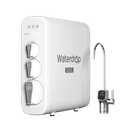
Waterdrop G3P600 Reverse Osmosis
Reverse Osmosis · NSF/ANSI 58, NSF/ANSI 372
Why it fits
Removes 12+ contaminants including PFAS and fluoride
Tankless design saves under-sink space
Smart TDS monitoring panel shows real-time water quality
Trade-offs
Professional installation recommended — plumbing required
Get a detailed water quality report for your exact area in Liverpool.
Frequently asked questions
Has PFAS been found in Liverpool water?
Yes. Environment Agency monitoring has detected 18 PFAS compounds across 15 sampling points in water sources near Liverpool. The highest recorded level is 0.960 µg/L (PFBA). Note that this is environmental monitoring of rivers and groundwater, not treated tap water.
What PFAS compounds were found in Liverpool?
The following PFAS compounds have been detected near Liverpool: PFHxA, PFecHS, PFOA, 6:2 FTSA, PFBA, PFOS (linear), PFPeS, PFOS (branched), PFHxS (branched), PFHxS (linear), PFBS, PFHpA, PFPeA, PFMOPrA, FBSA, PFOS, PFNS, PFOS (total). PFBA was recorded at the highest level of 0.960 µg/L.
Is Liverpool tap water safe to drink despite PFAS?
Liverpool tap water meets all current UK legal standards. However, the UK has no legal limit for PFAS in drinking water. The Environment Agency data shows PFAS in source water (rivers and groundwater), not in treated tap water. Water treatment may reduce PFAS levels, but the extent of removal is not publicly reported.
How can I remove PFAS from my water in Liverpool?
The most effective method is a reverse osmosis (RO) filtration system, which removes over 95% of PFAS compounds. Standard carbon filters and jug filters like BRITA do not effectively remove PFAS. An under-sink RO system is recommended for Liverpool households concerned about PFAS exposure.