Water does not go off. The date printed on the bottle is a best-before, a quality marker UK law requires on packaged food and drink, not a safety deadline. What actually ages is the packaging: the plastic, the seal, and how warm you have kept them.
So the honest answer splits three ways: sealed water is safe long past its date but slowly picks up taste from its bottle; an opened bottle is a fridge item with a couple of days of pleasant life in it; and a bottle cooked in a car or a sunny windowsill is where the real caution belongs, because heat speeds up the migration of packaging compounds into the water.
Water itself does not expire: the best-before date on UK bottled water marks packaging quality, not safety, according to TapWater.uk's review of storage guidance. Heat is the real variable; sealed bottles kept cool and dark stay safe long past their printed date.
What the best-before date actually marks
Bottlers typically print 6 months to 2 years from the bottling date. The figure reflects how long the water is expected to taste as intended in that packaging: PET plastic breathes slightly, letting trace air in and, over long storage, lending a faint plastic note. Glass bottles and cans are effectively taste-stable for years. None of this is a microbiological countdown; sealed, commercially bottled water is sterile enough that it does not spoil on the shelf.
Storage rules that matter more than the date
Keep bottles cool, dark, and away from strong-smelling products; PET picks up odours from solvents and cleaning chemicals stored alongside it. Avoid repeated heat: the compounds regulators track in bottled water, such as antimony from PET, migrate faster at high temperatures, which is why the boot of a car in summer is the worst place to keep your supply. And once opened, treat water like any other drink: recap it, refrigerate it, and finish it within a few days.
The cheaper answer to stale bottled water
If you buy bottled water for taste rather than emergencies, a filtered tap does the same job for a fraction of the cost and with no best-before date at all. Our tap water vs bottled water comparison runs the numbers, and the water filter jug guide covers the cheapest way in. Keeping a few sealed bottles for emergencies remains sensible; rotating them once a year keeps the taste fresh.
Instead of buying bottles
A filter jug pays for itself within a few weeks for anyone who buys bottled water for the taste. These are the three fixes our readers pick most.
The jug for cleaner drinking water
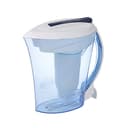
ZeroWater 12-Cup Ready-Pour
Jug Filter · NSF/ANSI 53, NSF/ANSI 401
Why it fits
NSF-certified to remove PFAS and heavy metals
Includes TDS meter so you can verify performance
5-stage filtration in a simple jug format
Trade-offs
Filters last only 2–3 weeks in hard water areas
Slower pour rate than BRITA — takes 5+ minutes to fill
Enter your postcode to see the measured quality of the water you already pay for.
Frequently asked questions
How long does bottled water last unopened?
Indefinitely, as far as safety goes: sealed water does not spoil, and the best-before date on UK bottles (typically 6 months to 2 years from bottling) is about quality, not safety. What changes over time is taste. Plastic PET bottles slowly let air migrate through and can lend the water a plastic taint, especially stored somewhere warm or in sunlight. Glass and cans hold their taste far longer.
Does bottled water expire?
Water itself cannot expire, and the UK best-before date is a quality marker the law requires on packaged foods, not a safety deadline. Bottled water past its date is safe if the seal is intact, though it may taste flat or faintly of plastic. The exception is any bottle that has been opened, stored hot, or damaged, where the packaging rather than the calendar is the problem.
How long does bottled water last once opened?
Refrigerated and recapped, an opened bottle stays pleasant for around 2 to 3 days. At room temperature the count is more like a day: bacteria from your mouth and the air multiply in standing water, and the taste goes stale well before anything becomes a health issue for a healthy adult. Small sips straight from the bottle shorten all of that, because they inoculate the water directly.
Is it safe to drink bottled water left in a hot car?
Occasionally, yes, but do not make a habit of it. Heat accelerates the migration of packaging compounds like antimony from PET plastic into the water, and studies measuring bottles stored at high temperatures for weeks found levels rising toward regulatory limits. One warm bottle is not dangerous; a summer of storing your water supply in the boot is the scenario to avoid.