Water softener salt: tablet, block or granular (2026)
By TapWater.uk Research · Updated September 2026 · Independent research
Salt is the only thing a water softener ever asks of you, and it asks every few weeks for fifteen years. The format is decided by the unit, not by preference: blocks for the twin-cylinder cabinets, tablets for almost everything else, granular for the few that say so. What you can choose is where to buy it and how much to buy at once, which is where the running cost is actually decided.
According to TapWater.uk, a family home in very hard UK water typically spends £5 to £10 a month on softener salt in 2026, with tablets in 25 kg sacks the cheapest per kilo and 4 kg blocks the format twin-cylinder softeners require. The highest-rated softener salt on Amazon UK is Hydrosalt's 25 kg tablets at 4.7 stars from more than 2,000 reviews.
This guide contains affiliate links. If you buy through them we earn a small commission at no extra cost to you, which funds our independent water quality research. Recommendations are based on real water data, not sponsorship. Full disclosure
Which format your softener takes
Look at the cabinet. A slot the shape of a house brick takes blocks. A tank with a lid takes tablets, unless the manual says granular. Each format is pure sodium chloride; the resin does not care which, but the mechanism that dissolves it does.
Tablets
Fits
Metered single-cylinder units: Monarch, most BWT, Water2Buy and the majority of online brands
Sold as
10 kg and 25 kg sacks, three-sack bundles
Price per kilo
Lowest
Handling
Pour into the brine tank; 25 kg is a two-handed lift
The default. Buy the biggest sack you can store dry and lift safely.
Stand two blocks in the cabinet; no scoop, no spillage
Not a choice, a requirement of the softener. Convenient enough that nobody minds.
Granular
Fits
Some older softeners and any unit whose manual specifies it; dishwashers
Sold as
10 kg bags
Price per kilo
Low to middling
Handling
Dissolves fast; can cake and bridge in a damp tank
Only if the manual says so. Do not put it in a unit designed for tablets.
Tablet salt
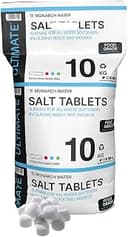
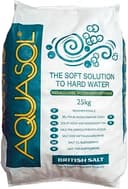
The workhorse. Three sizes, from a 10 kg bag you can carry up a loft ladder to a three-sack bundle that lasts a very hard water household a season. Look for BS EN 973 Class A on the bag where the maker states it.
Best-rated tablets on Amazon UK
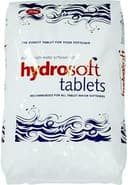
Hydrosalt Salt Tablets 25kg
Softener Salt & Supplies
Why it fits
Tablet salt, which is what most metered single-cylinder softeners take
25kg bag suits a household that tops up monthly rather than weekly
Highest-rated softener salt on Amazon UK, 4.7 stars across more than 2,000 reviews
What it won't do
Does not fit block-salt softeners such as Harvey or Kinetico UK models
Affiliate link: we may earn a commission at no extra cost to you.
Block salt
For Harvey, Kinetico and BWT block-salt cabinets. Each brand sells its own blocks; third-party 4 kg blocks are the same size and fit the same slot. You pay more per kilo than tablets and in return never touch a scoop.
For twin-cylinder cabinets
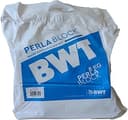
BWT Block Salt 8kg (2 × 4kg)
Softener Salt & Supplies
Why it fits
Two 4kg blocks, the format twin-cylinder softeners from Harvey, Kinetico and BWT take
Blocks drop straight into the cabinet with no scooping or spillage
Affiliate link: we may earn a commission at no extra cost to you.
Granular salt
Fine-grained and quick to dissolve, which is why some older softeners and every dishwasher specify it. In a modern tablet unit it can cake into a bridge over the brine tank, so only use it where the manual says to.
Only where the manual specifies it
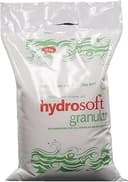
Hydrosoft Granular Salt 10kg
Softener Salt & Supplies
Why it fits
Granular salt for the softeners and dishwashers that specify it
Dissolves faster than tablets, so it suits units with small brine tanks
Rated 4.6 stars across more than 280 reviews
What it won't do
Does not suit most modern softeners, which specify tablets or blocks; check your manual first
Affiliate link: we may earn a commission at no extra cost to you.
How much you will get through
Two things set the rate: how hard the water is, because harder water exhausts the resin sooner, and how much water the household runs. A metered softener only regenerates when the resin is spent, so a couple in 200 mg/L water might top up every couple of months while a family of five in 350 mg/L water is lifting a sack every few weeks. The sensible budget for a family home in very hard water is £5 to £10 a month, and it falls if you buy in bulk.
Storage matters more than brand. Salt kept somewhere damp cakes into a solid lump that will not pour and, in the tank, forms a bridge that leaves the softener rinsing with plain water. Keep sacks sealed, off a concrete floor, and do not overfill the brine tank.
Check it is actually working
A full salt tank proves nothing if a bridge has formed or the resin is spent. A hardness test tablet dropped into a glass from the softened tap gives a yes-or-no answer in a minute. Test the hard kitchen tap alongside it and you will see the difference the unit is making, or not.
A one-minute answer
SimplexHealth Total Hardness Yes/No Test Tablets (pack of 2)
Softener Salt & Supplies
Why it fits
A quick yes/no check that your softener is actually producing soft water
Two tablets: test the softened tap and the unsoftened kitchen tap side by side
Cheaper than a plumber's call-out when you suspect the resin is spent
What it won't do
Does not treat the water: it is a test, not a fix
Does not give a number in mg/L, only a soft-or-hard answer
The format your softener was designed for. Non-electric twin-cylinder units from Harvey and Kinetico, and BWT's block-salt models, take 4 kg block salt. Most metered single-cylinder units from Monarch, BWT and Water2Buy take salt tablets poured into the brine tank. A few older units and dishwashers specify granular salt. Whatever the format, it should be pure sodium chloride made for softeners, ideally marked BS EN 973 Class A.
Can I use table salt, rock salt or dishwasher salt in a softener?
No to table salt and rock salt: table salt contains anti-caking agents and iodine, rock salt carries grit and clay, and both can foul the resin and the valve. Dishwasher salt is pure sodium chloride and will not harm the resin, but it is sold in small bags at a high price per kilo and its grain size can bridge in a brine tank. Buy softener salt.
How much salt does a water softener use?
It depends on how hard the water is and how much you use: a large family in very hard water regenerates far more often than a couple in merely hard water. As a rule of thumb, a family home in very hard water budgets £5 to £10 a month, which is roughly a 25 kg sack of tablets or several pairs of blocks. A metered unit only regenerates when the resin is spent, so it uses less than a timer unit set to rinse on fixed days.
Tablet salt or block salt: which is cheaper?
Tablets, per kilogram. They come in 10 kg and 25 kg sacks and three-sack bundles, and the price falls with size. Block salt is sold in pairs of 4 kg blocks and costs more per kilo; what you pay for is a format that drops into the cabinet without scooping or spillage and that the twin-cylinder brands require. Neither softens water better than the other.
What does BS EN 973 Class A mean?
BS EN 973 is the European standard for sodium chloride used to regenerate ion exchange softeners. Class A is the higher purity grade. It tells you the salt is free of the impurities that foul resin, which is what you want. Some reputable salt is not labelled with the standard, so its absence is not proof of a problem, but its presence is a reassurance.
Why has my softener stopped using salt?
Usually a salt bridge: a crust forms over the brine tank and the salt below it looks full while the water underneath has no salt to dissolve. Break it up with a broom handle. Other causes are a blocked brine line or a stuck float. If the salt level is fine and the water still feels hard, test the softened tap with a hardness tablet before calling anyone; it tells you in a minute whether the resin is doing its job.
Buying salt because you have no softener yet?
If you are reading this before you own one, get the unit priced first. Free quotes from installers covering your postcode, and the salt question answers itself.
Request a free assessment and we'll come back to you with local installer options for your area.