Tap water in SK9, Cheshire EastSafe to drink.Slightly hard.
Supplied by United Utilities. 1,557 samples, 16 substances, latest on 30 December 2024. Everything is inside the legal limit, and nothing comes close to it.
9.4 / 10
The tank is as full as the score. The specks are the minerals that make water hard.
What to do about it
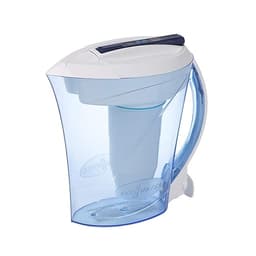
ZeroWater 12-Cup Ready-Pour
£40typical price
Households concerned about PFAS and heavy metals
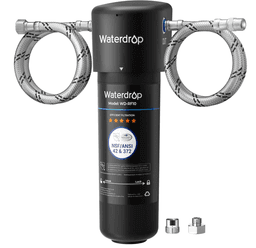
Waterdrop 10UA Under Sink
£70typical price
High-volume under-sink filtration without RO complexity
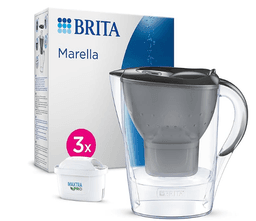
BRITA Marella XL + MAXTRA PRO
£25typical price
Basic chlorine and taste improvement on a budget
We earn a commission if you buy through these links, at no extra cost to you. It never changes which product we put first. How we make money
What's in a glass of SK9 water
Every bubble is a substance the lab measured. The higher it floats, the closer it came to its legal limit, the dashed line at the top.
Trihalomethanes came closest to a limit, at 32% of it. 15 of 16 substances used under a quarter of theirs.
- Trihalomethanes32%
- Nitrate8%
- Ammonia6%
- Antimony6%
- Bromate6%
- Lead6%
- Nickel4%
- Turbidity4%
- Iron3%
- Aluminium3%
- Selenium2%
- Cadmium2%
- Chromium2%
- Nitrite2%
- Manganese<1%
- Copper<1%
All 16 results as a table
| Substance | Result | Legal limit | Share of limit |
|---|---|---|---|
| Turbidity | 0.16 NTU | 4 NTU | 4% |
| Bromate | 0.00057 mg/L | 0.01 mg/L | 6% |
| Nitrate | 4.12 mg/L | 50 mg/L | 8% |
| Nitrite | 0.0075 mg/L | 0.5 mg/L | 2% |
| Ammonia | 0.0321 mg/L | 0.5 mg/L | 6% |
| Aluminium | 0.00622 mg/L | 0.2 mg/L | 3% |
| Iron | 0.007 mg/L | 0.2 mg/L | 3% |
| Manganese | 0.00045 mg/L | 0.05 mg/L | <1% |
| Copper | 0.0000104 mg/L | 2 mg/L | <1% |
| Nickel | 0.00089 mg/L | 0.02 mg/L | 4% |
| Lead | 0.00055 mg/L | 0.01 mg/L | 6% |
| Cadmium | 0.00009 mg/L | 0.005 mg/L | 2% |
| Chromium | 0.00083 mg/L | 0.05 mg/L | 2% |
| Antimony | 0.00031 mg/L | 0.005 mg/L | 6% |
| Selenium | 0.00085 mg/L | 0.04 mg/L | 2% |
| Trihalomethanes | 0.0316 mg/L | 0.1 mg/L | 32% |
138mg of limescale minerals in every litre
Middling hardness. Some scale, slowly
Below the point where a softener pays for itself. Descaling the kettle now and then is all most homes need.
Your river is the Bollin (Source to Dean), rated moderate
The Environment Agency rated the Bollin (Source to Dean) as moderate for ecological health in its 2025 assessment, meaning the river is noticeably changed by pollution or engineering. It is held back by phosphate, fish and ammonia. It fails the chemical test, as every river, estuary and stretch of coast in England does, because of long-lasting pollutants such as mercury, PFOS (a forever chemical) and old flame retardants.
None of this is a test of your tap water. Environment Agency record · River health across England
63
forever-chemical detections in nearby rivers and groundwater
At 9 sites. The highest was PFOA at 0.011 µg/L, at SSN0858 Ryle`s Wood Stream Near Springbank Farm, 8.5 km away, in October 2025. These are river and borehole samples, not tests of your tap water.
Every PFAS sample around Stockport · Which filters remove PFAS · PFAS explained
SK9 in short
Tap water in SK9 (Cheshire East) is supplied by United Utilities in the Cheshire East Central zone and scores 9.4 out of 10, against an England and Wales average of 9.0. None of the 16 tested substances came close to a limit. The latest sample is from 30 December 2024.
- 4th cleanest of 13 areas tested in Cheshire EastOnly 3 areas in Cheshire East scored higher. The best is CW10 on 9.4.
- PFAS found at 9 monitoring sites within 10 kmThose are river and groundwater samples, not tap water. The highest was PFOA about 8.5 km away. What was measured
- Nothing tested came within 40% of its legal limitThe highest was Trihalomethanes at 32% of the 0.1 mg/L maximum. See every reading
Questions about SK9 water
Is SK9 tap water safe to drink?
Based on the latest tests, SK9 (Cheshire East) water scores 9.4/10, which is safe. 0 of 16 tested contaminants exceeded recommended levels. Water is supplied by United Utilities.
What contaminants are in SK9 water?
We tested 16 contaminants in SK9 water. None exceeded recommended safe levels. PFAS (forever chemicals) were also measured in rivers and groundwater within 10 km, though not in the tap-water tests themselves.
Who supplies water in SK9?
SK9 (Cheshire East) is supplied by United Utilities. You can view their full profile and compliance data on our supplier page.
Is SK9 water hard or soft?
Water in SK9 (Cheshire East) has a hardness of 138 mg/L CaCO3, which is classified as moderately hard. This is a moderate hardness level.
Should I use a water filter in SK9?
SK9 water scored 9.4/10 with no contaminants above recommended levels. A filter is optional but can improve taste, especially if you notice a chlorine flavour. See our filter recommendations for your area.
Are there PFAS forever chemicals in SK9 water?
The tap-water tests we hold for SK9 do not include a PFAS result. Environment Agency monitoring found PFAS in 63 river and groundwater samples from 9 sites within 10 km of SK9, the highest being PFOA at 0.011 µg/L about 8.5 km away. These are environmental samples, not tests of tap water. The UK currently has no legal limit for PFAS in drinking water; the Drinking Water Inspectorate uses a 0.1 µg/L guideline for individual compounds. Reverse osmosis filters can reduce PFAS levels.
How clean is the river near SK9?
The Environment Agency rated the Bollin (Source to Dean) as moderate for ecological health in its 2025 assessment, meaning the river is noticeably changed by pollution or engineering. It is held back by phosphate, fish and ammonia. It fails the chemical test, as every river, estuary and stretch of coast in England does, because of long-lasting pollutants such as mercury, PFOS (a forever chemical) and old flame retardants. This is a rating of the river, not of tap water in SK9, which is treated before it reaches homes.
Keep reading
- Best Filter for PFAS RemovalThe filters with independent certification to remove forever chemicals
- PFAS Forever ChemicalsWhat PFAS are and how to reduce your exposure at home
- Is UK Tap Water Safe?Everything you need to know about tap water safety in the UK
- Best Water Filters UKEvery filter type compared on what it actually removes
PFAS explainedHow to test your waterBest water filtersFilter shower headsWater testing kitsUK water rankingsWater hardness checkerWater hardness map
River and groundwater readings near SK9
Environment Agency samples from rivers, groundwater and reservoirs nearby. Not your tap water. For scale they are shown against drinking water limits; rivers are judged against much stricter environmental standards, and on those every river in England fails for chemicals.
Get alerts for your area
We'll email you when water quality data changes for SK9.