Tap water in WA7, HaltonSafe to drink.Soft.
Supplied by United Utilities. 2,589 samples, 16 substances, latest on 24 December 2024. Everything is inside the legal limit, and nothing comes close to it.
9.0 / 10
The tank is as full as the score. The specks are the minerals that make water hard.
What to do about it
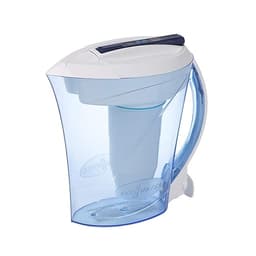
ZeroWater 12-Cup Ready-Pour
£40typical price
Households concerned about PFAS and heavy metals
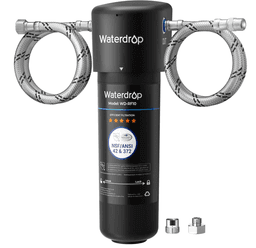
Waterdrop 10UA Under Sink
£70typical price
High-volume under-sink filtration without RO complexity
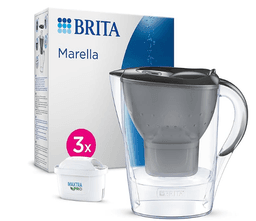
BRITA Marella XL + MAXTRA PRO
£25typical price
Basic chlorine and taste improvement on a budget
We earn a commission if you buy through these links, at no extra cost to you. It never changes which product we put first. How we make money
What's in a glass of WA7 water
Every bubble is a substance the lab measured. The higher it floats, the closer it came to its legal limit, the dashed line at the top.
Nitrate came closest to a limit, at 60% of it. 14 of 16 substances used under a quarter of theirs.
- Nitrate60%
- Trihalomethanes36%
- Iron13%
- Ammonia11%
- Antimony6%
- Lead6%
- Bromate5%
- Turbidity4%
- Nickel4%
- Aluminium3%
- Selenium2%
- Nitrite2%
- Cadmium2%
- Manganese2%
- Chromium2%
- Copper<1%
All 16 results as a table
| Substance | Result | Legal limit | Share of limit |
|---|---|---|---|
| Aluminium | 0.00622 mg/L | 0.2 mg/L | 3% |
| Iron | 0.025 mg/L | 0.2 mg/L | 13% |
| Manganese | 0.00084 mg/L | 0.05 mg/L | 2% |
| Bromate | 0.0005 mg/L | 0.01 mg/L | 5% |
| Nitrite | 0.0098 mg/L | 0.5 mg/L | 2% |
| Ammonia | 0.054 mg/L | 0.5 mg/L | 11% |
| Nitrate | 29.9 mg/L | 50 mg/L | 60% |
| Copper | 0.0000141 mg/L | 2 mg/L | <1% |
| Nickel | 0.00077 mg/L | 0.02 mg/L | 4% |
| Lead | 0.00055 mg/L | 0.01 mg/L | 6% |
| Trihalomethanes | 0.0357 mg/L | 0.1 mg/L | 36% |
| Turbidity | 0.16 NTU | 4 NTU | 4% |
| Cadmium | 0.00009 mg/L | 0.005 mg/L | 2% |
| Chromium | 0.00083 mg/L | 0.05 mg/L | 2% |
| Antimony | 0.00031 mg/L | 0.005 mg/L | 6% |
| Selenium | 0.00085 mg/L | 0.04 mg/L | 2% |
16mg of limescale minerals in every litre
Soft water. Kind to kettles, boilers and skin
You will not need a softener here, and you will use less soap and detergent than most of England.
Your river is the Keckwick Brook, rated moderate
The Environment Agency rated the Keckwick Brook as moderate for ecological health in its 2025 assessment, meaning the river is noticeably changed by pollution or engineering. It is held back by insects and other small river life, fish and phosphate. It fails the chemical test, as every river, estuary and stretch of coast in England does, because of long-lasting pollutants such as mercury, PFOS (a forever chemical) and old flame retardants.
None of this is a test of your tap water. Environment Agency record · River health across England
345
forever-chemical detections in nearby rivers and groundwater
At 6 sites. The highest was PFBS at 0.25 µg/L, at RSN1812 Near Hover Force Activity Centre, Hare'S Lane - Central New Cut Drain, 5.3 km away, in September 2024. These are river and borehole samples, not tests of your tap water.
Every PFAS sample around Warrington · Which filters remove PFAS · PFAS explained
WA7 in short
Tap water in WA7 (Halton) is supplied by United Utilities in the Halton Central zone and scores 9.0 out of 10, against an England and Wales average of 9.0. None of the 16 tested substances came close to a limit. The latest sample is from 24 December 2024.
- Nitrate is the reading closest to its limit, at 60% of the 50 mg/L maximumIt passed with room to spare, and everything else tested sat further below its limit. See every reading
- Soft water at 16 mg/LLimescale is not a problem in WA7, so skip softeners and scale filters entirely. How hardness is measured
- PFAS found at 6 monitoring sites within 10 kmThose are river and groundwater samples, not tap water. The highest was PFBS about 5.3 km away. What was measured
Next door
Questions about WA7 water
Is WA7 tap water safe to drink?
Based on the latest tests, WA7 (Halton) water scores 9/10, which is safe. 0 of 16 tested contaminants exceeded recommended levels. Water is supplied by United Utilities.
What contaminants are in WA7 water?
We tested 16 contaminants in WA7 water. None exceeded recommended safe levels. PFAS (forever chemicals) were also measured in rivers and groundwater within 10 km, though not in the tap-water tests themselves.
Who supplies water in WA7?
WA7 (Halton) is supplied by United Utilities. You can view their full profile and compliance data on our supplier page.
Is WA7 water hard or soft?
Water in WA7 (Halton) has a hardness of 16 mg/L CaCO3, which is classified as soft. Soft water is gentle on appliances and skin.
Should I use a water filter in WA7?
WA7 water scored 9/10 with no contaminants above recommended levels. A filter is optional but can improve taste, especially if you notice a chlorine flavour. See our filter recommendations for your area.
Are there PFAS forever chemicals in WA7 water?
The tap-water tests we hold for WA7 do not include a PFAS result. Environment Agency monitoring found PFAS in 345 river and groundwater samples from 6 sites within 10 km of WA7, the highest being PFBS at 0.25 µg/L about 5.3 km away. These are environmental samples, not tests of tap water. The UK currently has no legal limit for PFAS in drinking water; the Drinking Water Inspectorate uses a 0.1 µg/L guideline for individual compounds. Reverse osmosis filters can reduce PFAS levels.
How clean is the river near WA7?
The Environment Agency rated the Keckwick Brook as moderate for ecological health in its 2025 assessment, meaning the river is noticeably changed by pollution or engineering. It is held back by insects and other small river life, fish and phosphate. It fails the chemical test, as every river, estuary and stretch of coast in England does, because of long-lasting pollutants such as mercury, PFOS (a forever chemical) and old flame retardants. This is a rating of the river, not of tap water in WA7, which is treated before it reaches homes.
Keep reading
- Best Filter for PFAS RemovalThe filters with independent certification to remove forever chemicals
- PFAS Forever ChemicalsWhat PFAS are and how to reduce your exposure at home
- Is UK Tap Water Safe?Everything you need to know about tap water safety in the UK
- Best Water Filters UKEvery filter type compared on what it actually removes
PFAS explainedHow to test your waterBest water filtersFilter shower headsWater testing kitsUK water rankingsWater hardness checkerWater hardness map
River and groundwater readings near WA7
Environment Agency samples from rivers, groundwater and reservoirs nearby. Not your tap water. For scale they are shown against drinking water limits; rivers are judged against much stricter environmental standards, and on those every river in England fails for chemicals.
| Substance | Reading | Drinking water limit |
|---|---|---|
| Boron | 0.1 mg/L | 1 mg/L |
| pH | 0.18 pH | None |
| Dissolved Oxygen | 9.06 mg/L | None |
| Lead | 0.00025 mg/L | 0.01 mg/L |
| Mercury | 0.000011 mg/L | 0.001 mg/L |
| Nickel | 0.0027 mg/L | 0.02 mg/L |
| Temperature | 8.6 °C | None |
| Conductivity | 648 µS/cm | None |
| Ammonia | 0.19 mg/L | 0.5 mg/L |
| Nitrate | 3.4 mg/L | 50 mg/L |
| Nitrite | 0.031 mg/L | 0.5 mg/L |
| PFAS (total) | 0.0029 µg/L | None |
Get alerts for your area
We'll email you when water quality data changes for WA7.