tapwater

Tap water in GU34, East HampshireNo tap tests published.Very hard.

Supplied by South East Water. It publishes no tap-water test results for GU34, so there is no tap score here. The hardness figure is the company's own. Further down are 13 substances measured in rivers and groundwater nearby, before any treatment.

280 mg/L

Hardness, South East Water's own figure. There is no tap score: no tap results are published here. The specks are the minerals that make water hard.

What to do about it

Hard water: what helps

At 280 mg/L a softener is the only thing that stops limescale. Filters do not soften water.

A fitted softener costs £1,195 to £2,900. A filter kettle and a shower filter deal with the scale you notice most, for far less.

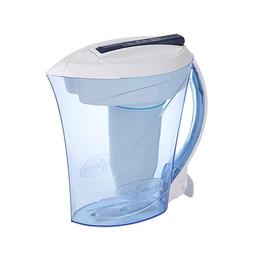
ZeroWater 10-Cup Jug

ZeroWater 10-Cup Jug

£40typical price

Households concerned about PFAS and heavy metals

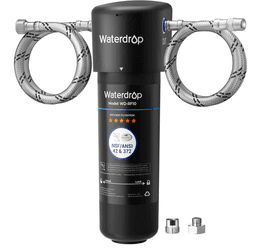
Waterdrop 10UA Under Sink

Waterdrop 10UA Under Sink

£70typical price

High-volume under-sink filtration without RO complexity

We earn a commission if you buy through these links, at no extra cost to you. It never changes which product we put first. How we make money

Hear about it if GU34’s water changes

We check for supply incidents every fifteen minutes. If one affects GU34, you get an email the same day. You also get five short emails about your water over the first month.

Want this as a document?

Every result, the limits, hardness and what to do, as a PDF to keep with the house papers or send to a buyer or landlord. £19.99.

See the full report for GU34

What's in the rivers and groundwater around GU34

South East Water publishes no tap-water results for GU34. These are Environment Agency samples of untreated river and groundwater nearby. Drinking-water limits apply to treated tap water, not to these samples; the dashed line shows where that limit would sit, for scale.

Fluoride sits highest, at 11% of the limit that would apply to tap water. These samples are untreated.

0%25%50%75%limitLegal limitCopper: 0.000996 mg/L, <1% of the 2 mg/L limitCopper<1%Nitrite: 0.018 mg/L, 4% of the 0.5 mg/L limitNitrite4%Nickel: 0.00133 mg/L, 7% of the 0.02 mg/L limitNickel7%Ammonia: 0.039 mg/L, 8% of the 0.5 mg/L limitAmmonia8%Nitrate: 4.4 mg/L, 9% of the 50 mg/L limitNitrate9%Fluoride: 0.169 mg/L, 11% of the 1.5 mg/L limitFluoride11%
  1. Fluoride11%
  2. Nitrate9%
  3. Ammonia8%
  4. Nickel7%
  5. Nitrite4%
  6. Copper<1%
  • pH 7.63 pH
  • Temperature 10.9 °C
  • Conductivity 673 µS/cm
  • Phosphate 0.071 mg/L
  • Dissolved Oxygen 8.45 mg/L
  • Zinc 0.00261 mg/L
All 13 results as a table
SubstanceResultTap-water limitShare of limit
pH7.63 pHNo legal limit–
Temperature10.9 °CNo legal limit–
Conductivity673 µS/cmNo legal limit–
Ammonia0.039 mg/L0.5 mg/L
8%
Nitrate4.4 mg/L50 mg/L
9%
Nitrite0.018 mg/L0.5 mg/L
4%
Phosphate0.071 mg/LNo legal limit–
Dissolved Oxygen8.45 mg/LNo legal limit–
Hardness (as CaCO3)341 mg/LNo legal limit–
Fluoride0.169 mg/L1.5 mg/L
11%
Zinc0.00261 mg/LNo legal limit–
Nickel0.00133 mg/L0.02 mg/L
7%
Copper0.000996 mg/L2 mg/L
<1%

280mg of limescale minerals in every litre

This is the water that furs up kettles

Very hard on the UK scale. It is fine to drink. It is hard on boilers, showers, skin and anything that heats water, and a jug or tap filter will not change that.

Soft400 mg/L

Over 200 mg/L, the building regulations guidance for England counts this as a hard water area: a new combination boiler or water heater should have limescale protection. The 200 ppm rule

280 mg/L in GU34: what helps with the limescale

Only a water softener takes the hardness out. Fitted, one costs £1,195 to £2,900, and you get quotes from installers directly; the cost guide has the price of each brand and what to ask. These cost far less and deal with the scale where you notice it most. None of them softens the water.

Keeps scale out of the kettle
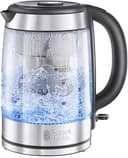
Russell Hobbs BRITA Purity Glass Kettle 1.5L

Russell Hobbs BRITA Purity Glass Kettle 1.5L

Kettle

Why it fits
  • Water passes through a BRITA MAXTRA PRO Limescale Expert cartridge before it is boiled, so less scale forms on the element
  • Glass body shows scale early, and wipes clean rather than hiding it
  • 1.5L is enough for a family pot of tea; 4.5 stars across 5,600+ reviews
What it won't do
  • Does not make hard water soft: it reduces temporary hardness, and the cartridge needs replacing roughly every 4 weeks

Affiliate link: we may earn a commission at no extra cost to you.

For dry skin and hair in a hard-water shower

Hello Klean Shower Head Plus

Hello Klean Shower Head Plus

Shower Filter

Why it fits
  • Removes 97% of chlorine, the usual cause of dry skin and hair in the shower
  • Scale inhibitor cuts the white film on screens and taps, by its maker's figures
  • Shows on the head when the cartridge needs changing
What it won't do
  • Does not soften the water: the hardness still comes through

Affiliate link: we may earn a commission at no extra cost to you.
Less scale in tea, coffee and the kettle

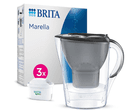
BRITA Marella XL + MAXTRA PRO

BRITA Marella XL + MAXTRA PRO

Jug Filter · TUV SUD

Why it fits
  • Affordable running costs with widely available filters
  • No installation — ready to use out of the box
  • 3.5L capacity suits families of up to four
What it won't do
  • Does not remove PFAS, fluoride, or nitrates

Affiliate link: we may earn a commission at no extra cost to you.

Affiliate link: we may earn a commission at no extra cost to you. How recommendations are funded

Outside your tap

Your river is the Caker Stream, rated bad

The Environment Agency rated the Caker Stream as bad for ecological health in its 2025 assessment, meaning the river is severely damaged, with most of the expected wildlife missing. It is held back by fish, water plants and algae and phosphate. It fails the chemical test, as every river, estuary and stretch of coast in England does, because of long-lasting pollutants such as mercury, PFOS (a forever chemical) and old flame retardants. Its ecological rating has dropped since the previous assessment.

None of this is a test of your tap water. Environment Agency record · River health across England

GU34 in short

Tap water in GU34 (East Hampshire) is supplied by South East Water. South East Water publishes no tap-water test results for this area, so there is no tap score for GU34. The 13 substances on this page were measured in rivers and groundwater nearby, before treatment, and say nothing certain about your tap. Every water company must meet the same legal standards at the tap. The hardness figure, 280 mg/L, is South East Water's own for this district. The latest sample is from 3 November 2026.

  • Very hard water at 280 mg/LThe threshold for very hard is 250 mg/L. Expect visible limescale on taps and in kettles in GU34. How hardness is measured
  • South East Water publishes no tap-water test results hereSo there is no tap score for GU34. The 13 substances on this page were measured in rivers and groundwater nearby, before treatment. What was measured

Questions about GU34 water

Is GU34 tap water safe to drink?

South East Water does not publish tap-water test results for GU34 (East Hampshire), so we cannot give it a score. Every water company in England and Wales must meet the same legal standards at the tap, and 99.97% of tap-water tests in England met them in 2025 (Drinking Water Inspectorate). If you want to know exactly what comes out of your own tap, South East Water will tell you on request, or you can test it at home.

What has been measured near GU34?

The Environment Agency measured 13 substances in rivers and groundwater near GU34. These are untreated samples taken before any water treatment, so drinking-water limits do not apply to them and they are not a test of your tap.

Who supplies water in GU34?

GU34 (East Hampshire) is supplied by South East Water.

Is GU34 water hard or soft?

South East Water gives the hardness in GU34 (East Hampshire) as 280 mg/L CaCO3, which is classified as very hard. Hard water leaves limescale in kettles, showers and boilers; only a water softener removes it.

How clean is the river near GU34?

The Environment Agency rated the Caker Stream as bad for ecological health in its 2025 assessment, meaning the river is severely damaged, with most of the expected wildlife missing. It is held back by fish, water plants and algae and phosphate. It fails the chemical test, as every river, estuary and stretch of coast in England does, because of long-lasting pollutants such as mercury, PFOS (a forever chemical) and old flame retardants. Its ecological rating has dropped since the previous assessment. This is a rating of the river, not of tap water in GU34, which is treated before it reaches homes.