Tap water in BN16, ArunSafe to drink.
Supplied by Southern Water. 18,315 samples, 25 substances, latest on 27 April 2026. Everything is inside the legal limit. One result, nitrate, sits close to the line.
9.3 / 10
The tank is as full as the score.
What to do about it
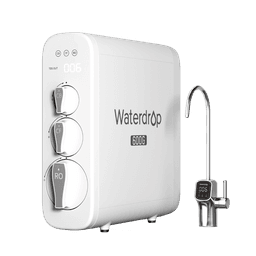
Waterdrop G3P600 Reverse Osmosis
£550typical price
Removes nitrate, the result that stood out in BN16.
Osmio PRO-III Ultimate Whole House
£499typical price
Removes nitrate, the result that stood out in BN16.
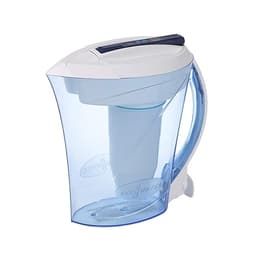
ZeroWater 12-Cup Ready-Pour
£40typical price
Removes nitrate, the result that stood out in BN16.
We earn a commission if you buy through these links, at no extra cost to you. It never changes which product we put first. How we make money
What's in a glass of BN16 water
Every bubble is a substance the lab measured. The higher it floats, the closer it came to its legal limit, the dashed line at the top.
Nitrate came closest to a limit, at 77% of it. 20 of 21 substances used under a quarter of theirs.
- Nitrate77%
- Colour15%
- Trihalomethanes12%
- Copper11%
- Nickel8%
- Ammonia8%
- Lead6%
- Aluminium6%
- Fluoride5%
- Iron5%
- Mercury4%
- Manganese4%
- Turbidity3%
- Arsenic2%
- Nitrite2%
- Boron2%
- Bromate1%
- Selenium1%
- Antimony<1%
- Cadmium<1%
- Chromium<1%
- pH 7.4 pH
- Coliform Bacteria none found
- E. coli none found
- Conductivity 587 µS/cm
All 25 results as a table
| Substance | Result | Legal limit | Share of limit |
|---|---|---|---|
| Nitrate | 38.4 mg/L | 50 mg/L | 77% |
| pH | 7.4 pH | No legal limit | – |
| Nitrite | 0.009 mg/L | 0.5 mg/L | 2% |
| Ammonia | 0.039 mg/L | 0.5 mg/L | 8% |
| Aluminium | 0.0113 mg/L | 0.2 mg/L | 6% |
| Iron | 0.00928 mg/L | 0.2 mg/L | 5% |
| Manganese | 0.00178 mg/L | 0.05 mg/L | 4% |
| Copper | 0.212 mg/L | 2 mg/L | 11% |
| Arsenic | 0.0002 mg/L | 0.01 mg/L | 2% |
| Cadmium | 0.000031 mg/L | 0.005 mg/L | <1% |
| Chromium | 0.00019 mg/L | 0.05 mg/L | <1% |
| Nickel | 0.0016 mg/L | 0.02 mg/L | 8% |
| Lead | 0.00061 mg/L | 0.01 mg/L | 6% |
| Antimony | 0.000042 mg/L | 0.005 mg/L | <1% |
| Selenium | 0.00043 mg/L | 0.04 mg/L | 1% |
| Coliform Bacteria | 0 count/100ml | Must be zero | None found |
| E. coli | 0 count/100ml | Must be zero | None found |
| Conductivity | 587 µS/cm | No legal limit | – |
| Trihalomethanes | 0.0116 mg/L | 0.1 mg/L | 12% |
| Colour | 3 mg/L Pt/Co | 20 mg/L Pt/Co | 15% |
| Turbidity | 0.13 NTU | 4 NTU | 3% |
| Fluoride | 0.08 mg/L | 1.5 mg/L | 5% |
| Mercury | 0.00004 mg/L | 0.001 mg/L | 4% |
| Boron | 0.0175 mg/L | 1 mg/L | 2% |
| Bromate | 0.00013 mg/L | 0.01 mg/L | 1% |
Your river is the Black Ditch (W Sussex), rated poor
The Environment Agency rated the Black Ditch (W Sussex) as poor for ecological health in its 2025 assessment, meaning the river is badly affected, with much of the expected wildlife missing. It is held back by fish and water plants and algae. It fails the chemical test, as every river, estuary and stretch of coast in England does, because of long-lasting pollutants such as mercury, PFOS (a forever chemical) and old flame retardants.
None of this is a test of your tap water. Environment Agency record · River health across England
BN16 in short
Tap water in BN16 (Arun) is supplied by Southern Water in the Arun Central zone and scores 9.3 out of 10, against an England and Wales average of 9.0. 1 of 25 tested substances was close to or over a limit. The latest sample is from 27 April 2026.
- Nitrate is within its legal limit but flagged, at 77% of the 50 mg/L maximumAnything over three quarters of a limit is flagged here as worth watching. It has not gone over. See every reading
- 3rd cleanest of 5 areas tested in ArunSquarely mid-table for Arun, between BN17 on 9.4 and PO21 on 9.
- Scores higher than 1 of 4 neighbouring districtsWater here is typical for the immediate area, which usually means the same treatment works and the same supply zone.
Questions about BN16 water
Is BN16 tap water safe to drink?
Based on the latest tests, BN16 (Arun) water scores 9.3/10, which is safe. 1 of 25 tested contaminants exceeded recommended levels. Water is supplied by Southern Water.
What contaminants are in BN16 water?
We tested 25 contaminants in BN16 water. 1 were flagged, including Nitrate.
Who supplies water in BN16?
BN16 (Arun) is supplied by Southern Water. You can view their full profile and compliance data on our supplier page.
Should I use a water filter in BN16?
With 1 contaminant above recommended levels in BN16, a water filter could help. A filter jug or under-sink filter can reduce most common contaminants. See our filter recommendations for your area.
Are there PFAS forever chemicals in BN16 water?
No PFAS (forever chemicals) result is attached to the tap-water tests for BN16, and the Environment Agency has no PFAS detections in rivers or groundwater within 10 km of it. That reflects where sampling has happened as much as the water itself.
How clean is the river near BN16?
The Environment Agency rated the Black Ditch (W Sussex) as poor for ecological health in its 2025 assessment, meaning the river is badly affected, with much of the expected wildlife missing. It is held back by fish and water plants and algae. It fails the chemical test, as every river, estuary and stretch of coast in England does, because of long-lasting pollutants such as mercury, PFOS (a forever chemical) and old flame retardants. This is a rating of the river, not of tap water in BN16, which is treated before it reaches homes.
Keep reading
- Best Water Filters UKEvery filter type compared on what it actually removes
- Is UK Tap Water Safe?Everything you need to know about tap water safety in the UK
- How to Test Your Tap WaterFrom DIY strips to professional lab analysis
- Best Water Filter Jug UKBRITA vs ZeroWater vs the rest, tested against real data
Nitrate levelsHow to test your waterBest water filtersFilter shower headsWater testing kitsUK water rankingsWater hardness checkerWater hardness map
River and groundwater readings near BN16
Environment Agency samples from rivers, groundwater and reservoirs nearby. Not your tap water. For scale they are shown against drinking water limits; rivers are judged against much stricter environmental standards, and on those every river in England fails for chemicals.
| Substance | Reading | Drinking water limit |
|---|---|---|
| pH | 7.53 pH | None |
| Temperature | 13 °C | None |
| Conductivity | 768 µS/cm | None |
| Ammonia | 0.07 mg/L | 0.5 mg/L |
| Nitrate | 8.5 mg/L | 50 mg/L |
| Nitrite | 0.035 mg/L | 0.5 mg/L |
| Phosphate | 0.043 mg/L | None |
| Dissolved Oxygen | 9.96 mg/L | None |
| Hardness (as CaCO3) | 373 mg/L | None |
| Fluoride | 0.114 mg/L | 1.5 mg/L |
| Chromium | 0.0023 mg/L | 0.05 mg/L |
| Boron | 0.108 mg/L | 1 mg/L |
| Copper | 0.0053 mg/L | 2 mg/L |
| Zinc | 0.0101 mg/L | None |
Get alerts for your area
We'll email you when water quality data changes for BN16.