Tap water in IP33, West SuffolkSafe to drink.Very hard.
Supplied by Anglian Water. 699 samples, 22 substances, latest on 30 December 2024. Everything is inside the legal limit. One result, nitrate, sits close to the line.
9.2 / 10
The tank is as full as the score. The specks are the minerals that make water hard.
What to do about it
Hard water: compare softener quotes
At 328 mg/L a softener is the only thing that stops limescale. Filters do not soften water.
It pays for itself in most homes at this hardness, through a boiler that stays efficient and appliances that last.
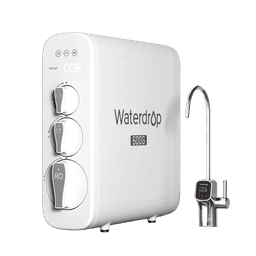
Waterdrop G3P600 Reverse Osmosis
£550typical price
Removes nitrate, the result that stood out in IP33.
Osmio PRO-III Ultimate Whole House
£499typical price
Removes nitrate, the result that stood out in IP33.
We earn a commission if you buy through these links, at no extra cost to you. It never changes which product we put first. How we make money
What's in a glass of IP33 water
Every bubble is a substance the lab measured. The higher it floats, the closer it came to its legal limit, the dashed line at the top.
Nitrate came closest to a limit, at 85% of it. 18 of 19 substances used under a quarter of theirs.
- Nitrate85%
- Nickel14%
- Iron11%
- Fluoride9%
- Bromate7%
- Trihalomethanes7%
- Aluminium6%
- Manganese6%
- Nitrite6%
- Mercury6%
- Turbidity5%
- Boron4%
- Arsenic3%
- Selenium2%
- Antimony2%
- Lead2%
- Chromium2%
- Copper2%
- Cadmium<1%
- Coliform Bacteria none found
- E. coli none found
- Conductivity 717 µS/cm
All 22 results as a table
| Substance | Result | Legal limit | Share of limit |
|---|---|---|---|
| Nitrate | 42.7 mg/L | 50 mg/L | 85% |
| Aluminium | 0.012 mg/L | 0.2 mg/L | 6% |
| Iron | 0.021 mg/L | 0.2 mg/L | 11% |
| Manganese | 0.003 mg/L | 0.05 mg/L | 6% |
| Copper | 0.03 mg/L | 2 mg/L | 2% |
| Arsenic | 0.00028 mg/L | 0.01 mg/L | 3% |
| Cadmium | 0.00002 mg/L | 0.005 mg/L | <1% |
| Chromium | 0.00076 mg/L | 0.05 mg/L | 2% |
| Nickel | 0.00281 mg/L | 0.02 mg/L | 14% |
| Lead | 0.00016 mg/L | 0.01 mg/L | 2% |
| Antimony | 0.0001 mg/L | 0.005 mg/L | 2% |
| Selenium | 0.00095 mg/L | 0.04 mg/L | 2% |
| Fluoride | 0.13 mg/L | 1.5 mg/L | 9% |
| Coliform Bacteria | 0 count/100ml | Must be zero | None found |
| E. coli | 0 count/100ml | Must be zero | None found |
| Turbidity | 0.21 NTU | 4 NTU | 5% |
| Nitrite | 0.03 mg/L | 0.5 mg/L | 6% |
| Trihalomethanes | 0.0065 mg/L | 0.1 mg/L | 7% |
| Bromate | 0.00073 mg/L | 0.01 mg/L | 7% |
| Mercury | 0.00006 mg/L | 0.001 mg/L | 6% |
| Conductivity | 717 µS/cm | No legal limit | – |
| Boron | 0.04 mg/L | 1 mg/L | 4% |
328mg of limescale minerals in every litre
This is the water that furs up kettles
Very hard on the UK scale. It is fine to drink. It is hard on boilers, showers, skin and anything that heats water, and a jug or tap filter will not change that.
Softener quotes for IP33
Leave your details and we will email you when we can match you with installers who cover IP33. No obligation.
Request a free assessment and we'll come back to you with local installer options for your area.
100%
free, no obligation
shared only with your consent
Your river is the Linnet, rated moderate
The Environment Agency rated the Linnet as moderate for ecological health in its 2025 assessment, meaning the river is noticeably changed by pollution or engineering. It is held back by dissolved oxygen, insects and other small river life and phosphate. It fails the chemical test, as every river, estuary and stretch of coast in England does, because of long-lasting pollutants such as mercury, PFOS (a forever chemical) and old flame retardants.
None of this is a test of your tap water. Environment Agency record · River health across England
IP33 in short
Tap water in IP33 (West Suffolk) is supplied by Anglian Water in the West Suffolk Central zone and scores 9.2 out of 10, against an England and Wales average of 9.0. 1 of 22 tested substances was close to or over a limit. The latest sample is from 30 December 2024.
- Nitrate is within its legal limit but flagged, at 85% of the 50 mg/L maximumAnything over three quarters of a limit is flagged here as worth watching. It has not gone over. See every reading
- Among the hardest water in the country at 328 mg/LVery hard starts at 250 mg/L. At this level kettles scale up within weeks and a softener is a normal purchase in IP33. How hardness is measured
- 5th cleanest of 7 areas tested in West Suffolk2 areas in West Suffolk scored lower. The best is IP27 on 9.4.
Questions about IP33 water
Is IP33 tap water safe to drink?
Based on the latest tests, IP33 (West Suffolk) water scores 9.2/10, which is safe. 1 of 22 tested contaminants exceeded recommended levels. Water is supplied by Anglian Water.
What contaminants are in IP33 water?
We tested 22 contaminants in IP33 water. 1 were flagged, including Nitrate.
Who supplies water in IP33?
IP33 (West Suffolk) is supplied by Anglian Water. You can view their full profile and compliance data on our supplier page.
Is IP33 water hard or soft?
Water in IP33 (West Suffolk) has a hardness of 328 mg/L CaCO3, which is classified as very hard. Hard water can cause limescale buildup. A water softener or filter jug may help.
Should I use a water filter in IP33?
With 1 contaminant above recommended levels in IP33, a water filter could help. A filter jug or under-sink filter can reduce most common contaminants. See our filter recommendations for your area.
Are there PFAS forever chemicals in IP33 water?
No PFAS (forever chemicals) result is attached to the tap-water tests for IP33, and the Environment Agency has no PFAS detections in rivers or groundwater within 10 km of it. That reflects where sampling has happened as much as the water itself.
How clean is the river near IP33?
The Environment Agency rated the Linnet as moderate for ecological health in its 2025 assessment, meaning the river is noticeably changed by pollution or engineering. It is held back by dissolved oxygen, insects and other small river life and phosphate. It fails the chemical test, as every river, estuary and stretch of coast in England does, because of long-lasting pollutants such as mercury, PFOS (a forever chemical) and old flame retardants. This is a rating of the river, not of tap water in IP33, which is treated before it reaches homes.
Keep reading
- Best Water Softener UKHarvey, Kinetico, BWT, Monarch and Water2Buy compared, with real costs
- Do I Need a Water Softener?The hardness bands, the symptoms, and a postcode check
- UK Water Hardness MapIs your water hard or soft, and does it matter?
- Best Water Filters UKEvery filter type compared on what it actually removes
- Do I need a water softener?The hardness bands, the symptoms, and when the answer is no
- Best water softener UKHarvey, Kinetico, BWT, Monarch and Water2Buy compared
- Water softener costUnit, fitting and salt, and how long the payback takes
- Installation explainedWhere it goes, the bypass tap, the drain, DIY or plumber
- Harvey vs KineticoThe two premium twin-cylinder brands, side by side
- Softener salt guideTablet, block or granular, and how much you get through
- Salt-free softenersConditioners and electronic descalers, honestly assessed
Nitrate levelsHow to test your waterBest water filtersFilter shower headsWater testing kitsUK water rankingsWater hardness checkerWater hardness map
River and groundwater readings near IP33
Environment Agency samples from rivers, groundwater and reservoirs nearby. Not your tap water. For scale they are shown against drinking water limits; rivers are judged against much stricter environmental standards, and on those every river in England fails for chemicals.
Get alerts for your area
We'll email you when water quality data changes for IP33.